GENERAL DESCRIPTION
During the first millennium BCE, the Chavín art style achieved its fullest development at the site of Chavín de Huántar in the Peruvian northern highlands. The first sophisticated Andean goldwork was produced during the fluorescence of Chavín culture and bears its symbols, the most influential of which was the principal deity, the Staff God. This impressive work on sheet gold repeats three portrayals of this Chavín deity. Powerful predators—jaguar, harpy eagle, caiman, and serpent—define his image: the snarling mouth has feline fangs; serpent heads emerge from the head and waist; talons marks fingers and toes. The figure’s frontal stance, the bilateral symmetry of the composition, and the combination of human and animal features are characteristic of the Chavín style. The sculptural clarity of the forms and the dramatic use of cut-out negative space distinguish the crown among other known examples of goldwork in the Chavín style.
Excerpt from
Bonnie Pitman, ed., "Crown with deity figures (2005.35.McD)," in Dallas Museum of Art: A Guide to the Collection (New Haven, CT: Yale University Press, 2012), 22.
NOTES
- Chavín, Early Horizon, 800–200 B.C.E., updated by KJones in TMS on 06/18/14 and 02/12/16.
- Fun Facts Sources: "Acquisition Proposal," in DMA Object File, 2005.35.McD (Crown with deity figures), Dallas, Texas: Dallas Museum of Art, 2004: 2; Object File, "Letter from Richard Burger," in DMA Object File, 2005.35.McD (Crown with deity figures), Dallas, Texas: Dallas Museum of Art, 2004: 2.
Fun Fact removed at the request of Michelle Rich, Fran Baas, Elena Torok- 1/14/2020. John Dennis, former DMA Conservator, made the important observation that the impression of roots marks the surface, suggesting that the crown had once been buried for some time.
Cultures
Chavín horizon: AAT: 300017269
Early Horizon: AAT: 300017267
Geography
Chavín (ancient site): TGN: 6001308
Peru (nation): TGN: 1000056
Process/materials
gold: AAT: 300011021
goldwork: AAT: 300044045
alloy: AAT: 300010902
gold alloy: AAT: 300010963
solder: AAT: 300010993
repoussé: AAT: 300054023
metalwork: AAT: 300015336
Historical periods
Early Horizon: AAT: 300017267
Individuals
Subject terms
ceremonial costume: AAT: 300210387
crowns (costume components): AAT: 300213000
crowns (headdresses): AAT: 300210387
deities: AAT: 300343850
shiny (shine): AAT: 300065244
jaguar: AAT: 300310389
eagle (bird): AAT: 300250049
alligators (animals): AAT: 300252286
caimans (alligators / Crocodilia order / Alligatoridae family): DMA
serpents (snakes/Serpentes suborder): AAT: 300250870
transformations (concepts / processes): DMA
staff god (Chavín/Early horizon deity): DMA
visual metaphoric substitution (kennings / concept / motif): DMA
RELATED OBJECTS
PROVENANCE
From early 1920s: Josef Weller [1]
n.d.: his grandson, Daniel Weller, Munich, by inheritance [1]
2004-2005: Arte Textil (Steve Berger, Steve Berger, Inc.), San Francisco [1], [2]
From 2005: Dallas Museum of Art, The Eugene and Margaret McDermott Art Fund, Inc., purchased from the above [2], [3]
[1] The main source for this provenance was existing provenance information in TMS. Exceptions and other supporting documents are noted.
[2] The main source for this provenance is Arte Textil's invoice (dated May 25, 2005 copy in Dallas Museum of Art Collections Records Object File). Exceptions and other supporting documents are noted.
[3] Works of art given or purchased by The Eugene and Margaret McDermott Art Fund, Inc., a non-profit organization, are placed in the custody of the DMA for the purpose of public display on the premises of the Museum or in other recognized art galleries or museum. The title to all works of art purchased (or otherwise acquired) by the McDermott Art Fund remains with the Fund.
AUDIO ASSETS
VIDEO ASSETS
IMAGE ASSETS
- 253365049: UMO. [Caption] Jaguar (Panthera onca). Source: Lea Maimone (own work), Wikimedia Commons, accessed: April 27, 2015, http://commons.wikimedia.org/wiki/Panthera_onca#/media/File:Panthera_onca.jpg.

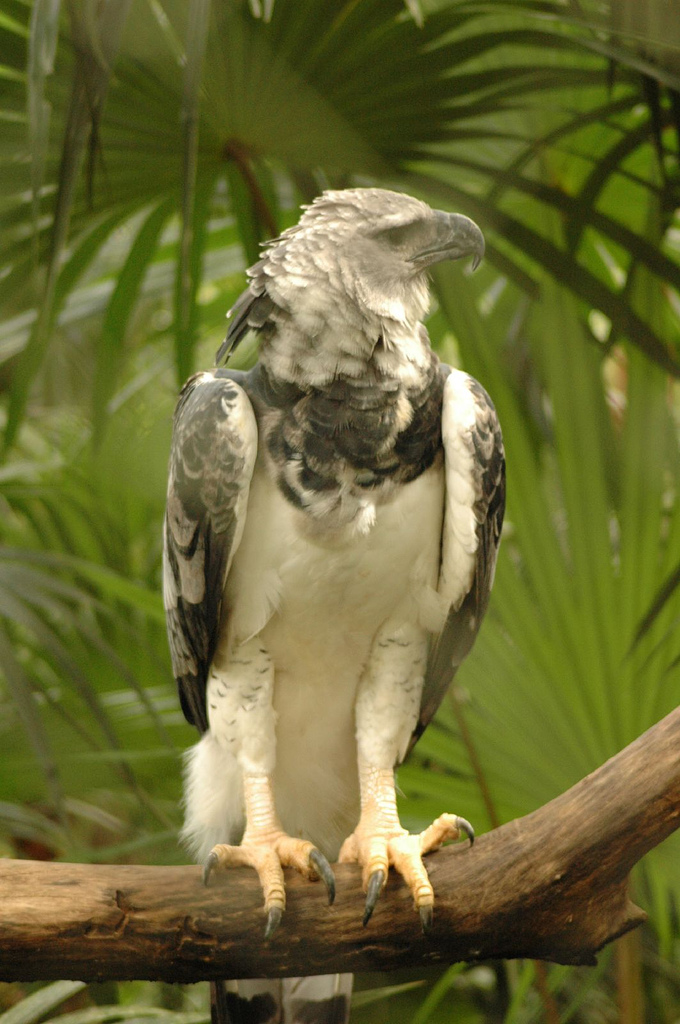
- 253364910: UMO. [Caption] Harpy eagle (Harpia harpyja). Source: Michael Schamis, Wikimedia Commons, accessed: April 27, 2015, http://upload.wikimedia.org/wikipedia/commons/f/f4/Harpia_harpyja_-Belize_Zoo-8b.jpg.
- 253363245: UMO. [Caption] Caiman (Caiman yacare). Source: Lea Maimone (own work), Wikimedia Commons, accessed: June 01, 2015, http://commons.wikimedia.org/wiki/File:Caiman_yacare.jpg#/media/File:Caiman_yacare.jpg.

WEB RESOURCES
ARCHIVAL RESOURCES
- 200X.002 - Director's Office - Deputy Director/Director - Bonnie Pitman, 2000-2009. Accession 2: A2010.001 - Files from office cabinets, 1 October 2010. Box 3: Building (Gluckman Mayner, Pentagram) - Collections, 2001-2008. Folder 53: Collections - Chavin Crown, 2006.
- 200X.002 - Director's Office - Deputy Director/Director - Bonnie Pitman, 2000-2009. Accession 2: A2010.001 - Files from office cabinets, 1 October 2010. Box 3: Building (Gluckman Mayner, Pentagram) - Collections, 2001-2008. Folder 54: Collections - Chavin Crown, 2007.
FUN FACTS
- The form is not a complete, continuous cylinder and has a space and holes that could have been used for tying or lashing (securing or binding), and it thus likely functioned as a crown or headdress.
TEACHING IDEAS
RULES
Apply to objects where number equals 2005.35.McD
Category
rules_operator
AND
General Description
During the first millennium BCE, the Chavín art style achieved its fullest development at the site of Chavín de Huántar in the Peruvian northern highlands. The first sophisticated Andean goldwork was produced during the fluorescence of Chavín culture and bears its symbols, the most influential of which was the principal deity, the Staff God. This impressive work on sheet gold repeats three portrayals of this Chavín deity. Powerful predators—jaguar, harpy eagle, caiman, and serpent—define his image: the snarling mouth has feline fangs; serpent heads emerge from the head and waist; talons marks fingers and toes. The figure’s frontal stance, the bilateral symmetry of the composition, and the combination of human and animal features are characteristic of the Chavín style. The sculptural clarity of the forms and the dramatic use of cut-out negative space distinguish the crown among other known examples of goldwork in the Chavín style.
Excerpt from
Bonnie Pitman, ed., "Crown with deity figures (2005.35.McD)," in Dallas Museum of Art: A Guide to the Collection (New Haven, CT: Yale University Press, 2012), 22.
Fun Facts
- The form is not a complete, continuous cylinder and has a space and holes that could have been used for tying or lashing (securing or binding), and it thus likely functioned as a crown or headdress.
Archival Resources
- 200X.002 - Director's Office - Deputy Director/Director - Bonnie Pitman, 2000-2009. Accession 2: A2010.001 - Files from office cabinets, 1 October 2010. Box 3: Building (Gluckman Mayner, Pentagram) - Collections, 2001-2008. Folder 53: Collections - Chavin Crown, 2006.
- 200X.002 - Director's Office - Deputy Director/Director - Bonnie Pitman, 2000-2009. Accession 2: A2010.001 - Files from office cabinets, 1 October 2010. Box 3: Building (Gluckman Mayner, Pentagram) - Collections, 2001-2008. Folder 54: Collections - Chavin Crown, 2007.
Web Resources
Notes
- Chavín, Early Horizon, 800–200 B.C.E., updated by KJones in TMS on 06/18/14 and 02/12/16.
- Fun Facts Sources: "Acquisition Proposal," in DMA Object File, 2005.35.McD (Crown with deity figures), Dallas, Texas: Dallas Museum of Art, 2004: 2; Object File, "Letter from Richard Burger," in DMA Object File, 2005.35.McD (Crown with deity figures), Dallas, Texas: Dallas Museum of Art, 2004: 2.
Fun Fact removed at the request of Michelle Rich, Fran Baas, Elena Torok- 1/14/2020. John Dennis, former DMA Conservator, made the important observation that the impression of roots marks the surface, suggesting that the crown had once been buried for some time.
Cultures
Chavín horizon: AAT: 300017269
Early Horizon: AAT: 300017267
Geography
Chavín (ancient site): TGN: 6001308
Peru (nation): TGN: 1000056
Process/materials
gold: AAT: 300011021
goldwork: AAT: 300044045
alloy: AAT: 300010902
gold alloy: AAT: 300010963
solder: AAT: 300010993
repoussé: AAT: 300054023
metalwork: AAT: 300015336
Historical periods
Early Horizon: AAT: 300017267
Individuals
Subject terms
ceremonial costume: AAT: 300210387
crowns (costume components): AAT: 300213000
crowns (headdresses): AAT: 300210387
deities: AAT: 300343850
shiny (shine): AAT: 300065244
jaguar: AAT: 300310389
eagle (bird): AAT: 300250049
alligators (animals): AAT: 300252286
caimans (alligators / Crocodilia order / Alligatoridae family): DMA
serpents (snakes/Serpentes suborder): AAT: 300250870
transformations (concepts / processes): DMA
staff god (Chavín/Early horizon deity): DMA
visual metaphoric substitution (kennings / concept / motif): DMA
RELATED OBJECTS
PROVENANCE
From early 1920s: Josef Weller [1]
n.d.: his grandson, Daniel Weller, Munich, by inheritance [1]
2004-2005: Arte Textil (Steve Berger, Steve Berger, Inc.), San Francisco [1], [2]
From 2005: Dallas Museum of Art, The Eugene and Margaret McDermott Art Fund, Inc., purchased from the above [2], [3]
[1] The main source for this provenance was existing provenance information in TMS. Exceptions and other supporting documents are noted.
[2] The main source for this provenance is Arte Textil's invoice (dated May 25, 2005 copy in Dallas Museum of Art Collections Records Object File). Exceptions and other supporting documents are noted.
[3] Works of art given or purchased by The Eugene and Margaret McDermott Art Fund, Inc., a non-profit organization, are placed in the custody of the DMA for the purpose of public display on the premises of the Museum or in other recognized art galleries or museum. The title to all works of art purchased (or otherwise acquired) by the McDermott Art Fund remains with the Fund.
AUDIO ASSETS
VIDEO ASSETS
rules
Apply To
Objects
number
Equals
2005.35.McD
source file
object_notes_1_a-0023.xml.nores